
Chores for Kids by Age: A Practical List From 2 to 17
The short answer: toddlers of 2 or 3 can put toys away, 4 and 5 year olds can feed a pet and help clear the table, 6 and 7 year olds can wipe tables and sweep, 8 to 10 year olds can vacuum and help make dinner, 11 and 12 year olds can clean the kitchen and bathroom, and teens can take on most of what an adult does, from laundry to the grocery run.
That list comes from two pediatric sources: the American Academy of Child and Adolescent Psychiatry (AACAP) and the American Academy of Pediatrics (AAP). Treat it as a guide, not a rule. Kids get there at different speeds, and a chore your 7 year old can't do yet is a chore to practice together, not a failure.
Chores by age at a glance
| Age | Chores to try |
|---|---|
| 2 to 3 | Put toys away, help put groceries away, get dressed with help |
| 4 to 5 | Help feed pets, make their bed (not perfectly), help clear the table |
| 6 to 7 | Wipe tables, put laundry away, sweep, set the table, empty wastebaskets |
| 8 to 10 | Load and unload the dishwasher, vacuum, help make dinner, pack lunch |
| 11 to 12 | Change sheets, clean the kitchen and bathroom, do laundry, yard work |
| 13 to 17 | Vacuum shared rooms, wash the car, mow (12+), grocery shopping, help with siblings |
Each age builds on the one before. A 10 year old still puts toys away and still makes their bed; the new jobs are added on top.
Ages 2 to 3: helping, not finishing
At this age a chore is something you do together. The AACAP says 2 to 3 year olds can put toys and groceries away and dress themselves with help, and it notes there are benefits to including chores in a child's routine as early as age 3.
- Put toys back in a bin or basket. One bin per type of toy makes it easier.
- Put groceries away: the unbreakable things that live on a low shelf.
- Get dressed with help. The CDC's milestones for 3 year olds include putting on some clothes by themselves, like loose pants or a jacket.
- Put dirty clothes in the hamper.
How to teach it: make it a game or a song, and do it alongside them. Expect to finish the job yourself, and say thank you anyway.
Ages 4 to 5: their first real jobs
The CDC lists "likes to be a helper" as a milestone at 4, and by 5 it lists doing simple chores at home, like matching socks or clearing the table after eating. The AACAP adds helping feed pets and making their bed, "maybe not perfectly".
- Help feed the pets, with you measuring the food.
- Make their bed. A pulled-up duvet counts.
- Help clear the table after meals: their own plate and cup first.
- Match socks from the clean laundry.
- Water plants with a small watering can.
How to teach it: one step at a time. "Put your plate by the sink" is a chore; "clean up after dinner" is five chores.
Ages 6 to 7: everyday helpers
This is where kids can start owning a job. The AACAP's list for 6 to 7 year olds is wiping tables and counters, putting laundry away and sweeping floors. The AAP's list for ages 5 to 7 is longer:
- Set and clear the table for meals.
- Make their own bed.
- Put toys away and neaten bookshelves.
- Dust, sweep floors, empty wastebaskets.
- Sort laundry and put dirty clothes in the hamper.
- Fill the pet's food dish and water the flowers.
- Bring in the mail.
- Make and pack school lunches.
- Wash plastic dishes in the sink.
- Weed and rake leaves.
How to teach it: show them once, do it together once, then watch them do it once. After that it's their job, with you checking in.
Ages 8 to 10: real contributions
At this age the work starts to genuinely help. The AAP adds vacuuming, helping make dinner, making their own snacks, walking the dog, and putting away their own laundry and the groceries. The AACAP says 7 to 9 year olds can load and unload the dishwasher, help with meal prep and pack their own school lunch.
- Load and unload the dishwasher.
- Vacuum a room.
- Help make dinner alongside you.
- Make their own snacks.
- Walk the dog.
- Put away their own laundry and the groceries.
- Take out the trash and recycling.
How to teach it: agree what "done" means. "Vacuum the living room" should include under the coffee table, and it's fairer to say so before they start than after.
Ages 11 to 12: running parts of the house
Preteens can take on the jobs most adults would rather skip. The AAP's list for 11 and 12 year olds adds cleaning the kitchen, changing bedsheets, unloading the dishwasher, doing and folding laundry, scrubbing toilets and cleaning the bathroom, washing the car, cooking a simple meal with supervision, and watching younger siblings with an adult at home. The AACAP puts changing sheets, cleaning the kitchen or bathrooms and yard work at 10 to 11.
- Change their sheets.
- Clean the kitchen after a meal.
- Clean the bathroom, toilet included.
- Do a load of laundry start to finish: wash, dry, fold, put away.
- Cook a simple meal, with an adult supervising.
- Yard work: weeding, raking, watering.
How to teach it: these are multi-step jobs, so write the steps down the first few times. A bathroom checklist (toilet, sink, mirror, floor) saves a lot of "you missed a bit".
Ages 13 to 17: almost everything
The AAP's article on chores for teens puts it simply: if your teen can operate a smartphone, they can figure out how to use a washing machine, an oven and a dishwasher. On top of everything from the younger ages, it suggests:
- Vacuum the shared spaces: living room, hallways, stairs.
- Wash and vacuum the car, especially if they drive it.
- Mow the lawn, spread mulch and weed (see the age guidance below).
- Clear snow from the walkways and driveway.
- Do the grocery shopping once they have a driver's license.
- Clean the kitchen after cooking.
- Pet care: feeding and grooming.
- Help with younger siblings.
The same article makes a point worth repeating to a busy teen: practice or a part-time job isn't a reason to stop contributing at home, the same way parents don't stop doing household jobs because they go to work.
Safety: the few chores with rules
Most chores need judgment, not rules. A few have official guidance, and these are worth following exactly.
- Lawn mowers. The AAP recommends that children be at least 12 to use a walk-behind power mower and at least 16 for a ride-on mower, and only once they show the maturity, judgment, strength and coordination the job needs. Teach them first and supervise until you're sure they can manage alone. The same page says younger children should be indoors or well away from the area being mowed, and never ride as passengers on a ride-on mower.
- Cleaning products. The US Consumer Product Safety Commission's Lock Up Poisons guide lists cleaners among the most frequent causes of unintentional poisoning in children. It says to keep household products in their original containers, store them in a cabinet with a child safety latch or lock, away from food, and read the label before using any product. If you think a child has swallowed something, call Poison Help at 1-800-222-1222.
- Cooking. The AAP puts cooking a simple meal with supervision at 11 to 12, and has younger kids help make dinner rather than run it. Even at 4, the CDC milestone for pouring water or serving food is with adult supervision.
How to teach any chore
The AAP and the AACAP agree on most of this.
- Spell it out. The AACAP suggests clear, specific requests, like "please take out the trash from the kitchen after breakfast", instead of "help out more".
- Add one new chore at a time. For a school-age child who hasn't had chores before, the AAP says to introduce one new task at a time, because a long list can be overwhelming.
- Same time every day. Both suggest tying chores to a routine: table before dinner, toys before bath, trash after breakfast.
- Praise the effort, not the result. The AAP says not to expect perfection; this is a learning process. The AACAP adds that if you need to loop back and help them finish, it may just mean they're still learning.
- Make it visible. The AAP recommends a chore chart or checklist on the fridge or in their room, so expectations are clear and everyone stays on task.
- Be consistent, and pick your battles. Changing rules causes confusion, says the AACAP, and a messy room is not the end of the world.
- Check in as a family. The AAP suggests regular family meetings to review how chores are going and ask kids for their ideas.
If chores keep turning into a standoff despite all this, both organizations suggest talking to your pediatrician.
Put kids on the family chore chart
A chart works best when it lists the whole household, not just the kids. Children see who empties the dishwasher and who cleans the bathroom, and the adults' jobs are on there too.
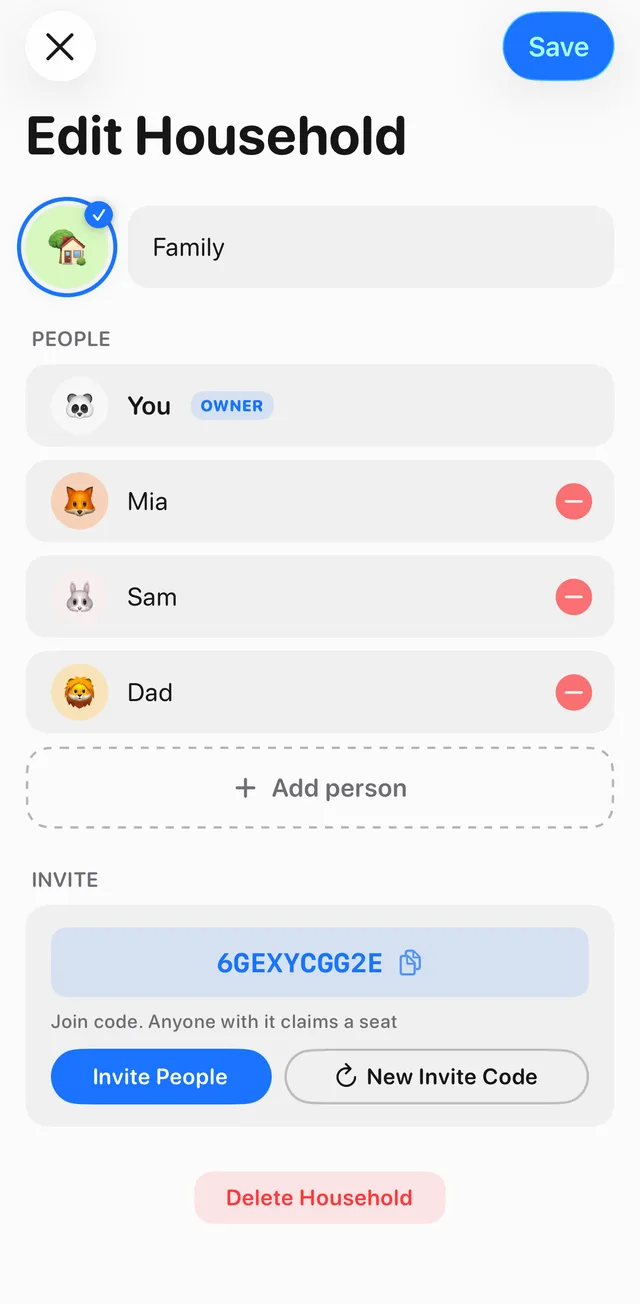
This is where Tidy Up helps. You create a household and add people by name, with an emoji and a color each. Kids don't need a phone or an account to be on the chart: a younger child is simply a name in the household that you can assign chores to.
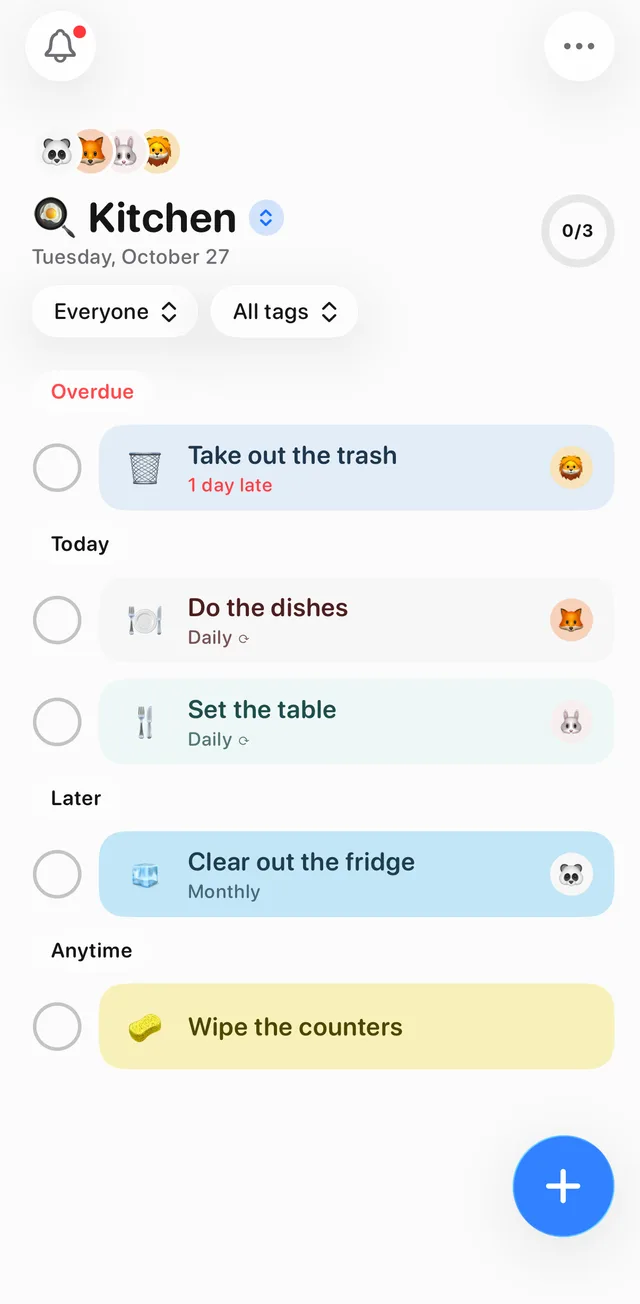
Each room or area is a space with its own chores, and each chore can go to one person, several, or anyone, and repeat daily, weekly, every 2 weeks, monthly, every 3 months or yearly. For the jobs kids share, turn on rotation and the turn moves to the next person every time it's ticked off. Two kids taking turns setting the table is exactly that: Sam tonight, Mia tomorrow, and nobody has to remember whose night it is.
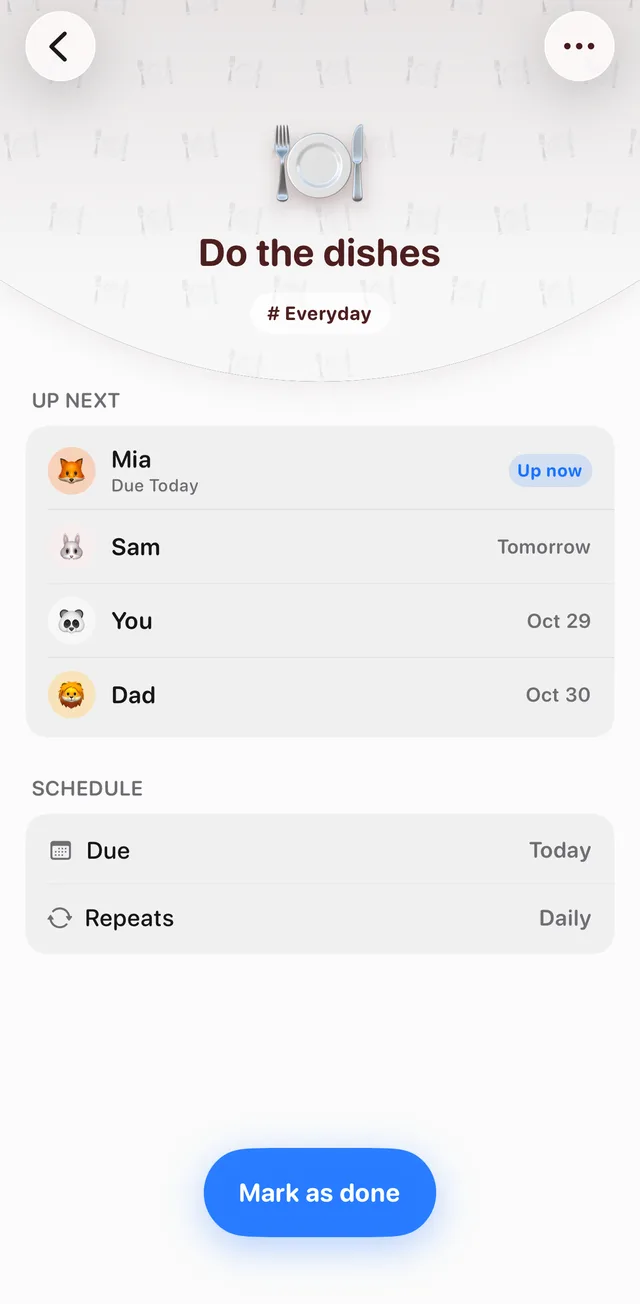
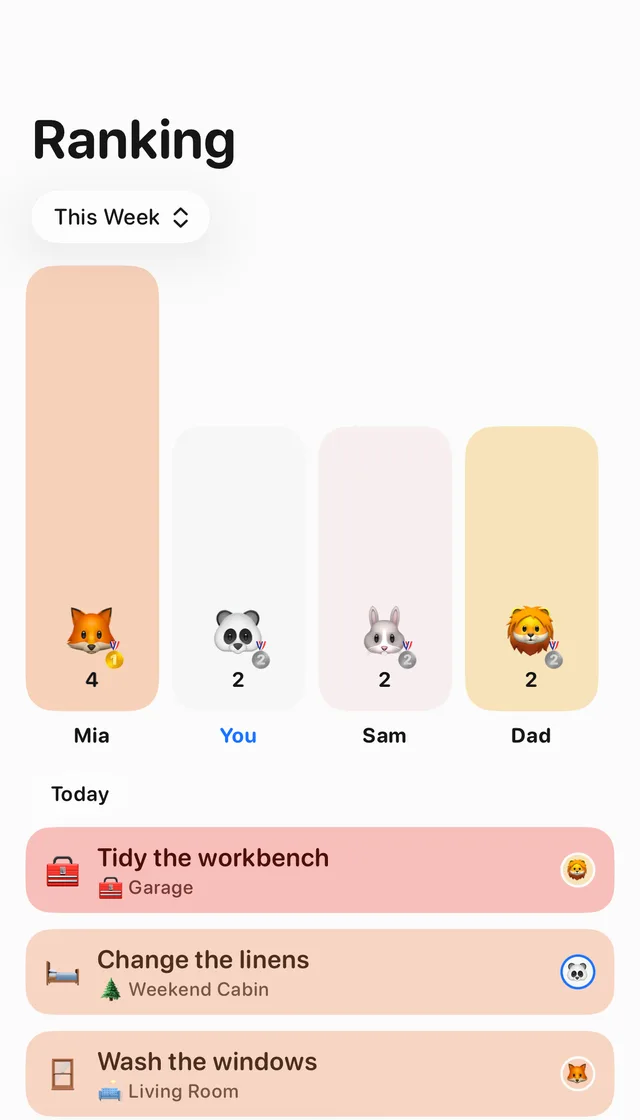
A younger child without a device doesn't tick their own chores off. You tick it off for them from your phone, and when the chore is assigned to that one child, or it's their turn on a rotating chore, it counts for them. The Ranking tab then shows how many chores each person completed this week, this month or all time, kids included. If an older kid has their own iPhone, they can join the household with the 10-character code and claim the spot you already made for them; joining needs a sign-in with Apple or Google.
Tidy Up doesn't handle allowances or rewards. If your family uses them, that part of the deal stays between you and your kids.
It's free for unlimited people and chores, with up to 5 spaces you create per household and rotation on up to 3 chores. Tidy Up+ adds unlimited spaces and rotation and a morning digest of what's due today. If you're also sorting out the grown-up side of the house, see our guides to a house cleaning schedule, splitting chores with a partner and splitting chores with roommates.

Tidy Up: chores, schedules and turns
Invite your household with one code, set chores to repeat on a schedule, let them rotate so everyone takes turns, and see who did what in the weekly ranking. Free to start, no ads.

Common questions
What chores can a 5 year old do?
The AAP's list for 5 to 7 year olds includes making their bed, setting and clearing the table, putting toys away, dusting, putting dirty clothes in the hamper, filling a pet's food dish and watering flowers. The CDC lists simple chores like matching socks or clearing the table as a milestone at 5.
What chores should an 8 year old do?
Everything from the younger ages plus vacuuming, helping make dinner, making their own snacks, walking the dog and putting away their own laundry and the groceries (AAP). The AACAP adds loading and unloading the dishwasher and packing their own school lunch.
At what age can kids mow the lawn?
The AAP recommends at least 12 for a walk-behind power mower and at least 16 for a riding mower, and only once your child shows the maturity and coordination the job needs. Teach them and supervise until you're sure they can do it alone.
How many chores should a child have?
There's no official number. The AAP says to introduce one new task at a time and warns against overloading kids, so start with one or two daily jobs and add more as each one becomes routine.
Should kids get paid for chores?
That's a family decision. The AAP mentions allowances and stickers as one option alongside honest praise, and the AACAP suggests a star chart or reward system.